Battery storage investment and the IAB: What is tax-wise possible
IAB for battery storage: advance deduction under § 7g EStG, payback period, self-consumption and why movable fixed assets are often contested.
In this article9
- What is the investment deduction allowance (IAB) for battery storage?
- Do battery storage systems qualify for the IAB?
- When does a battery storage system pay back?
- Is the investment deduction allowance (IAB) possible for photovoltaic systems?
- Which investments are eligible for the IAB?
- Which assets qualify for the IAB?
- Next steps: from the home storage system to large-scale storage investment
- Frequently asked questions
- Sources
What is the investment deduction allowance (IAB) for battery storage?
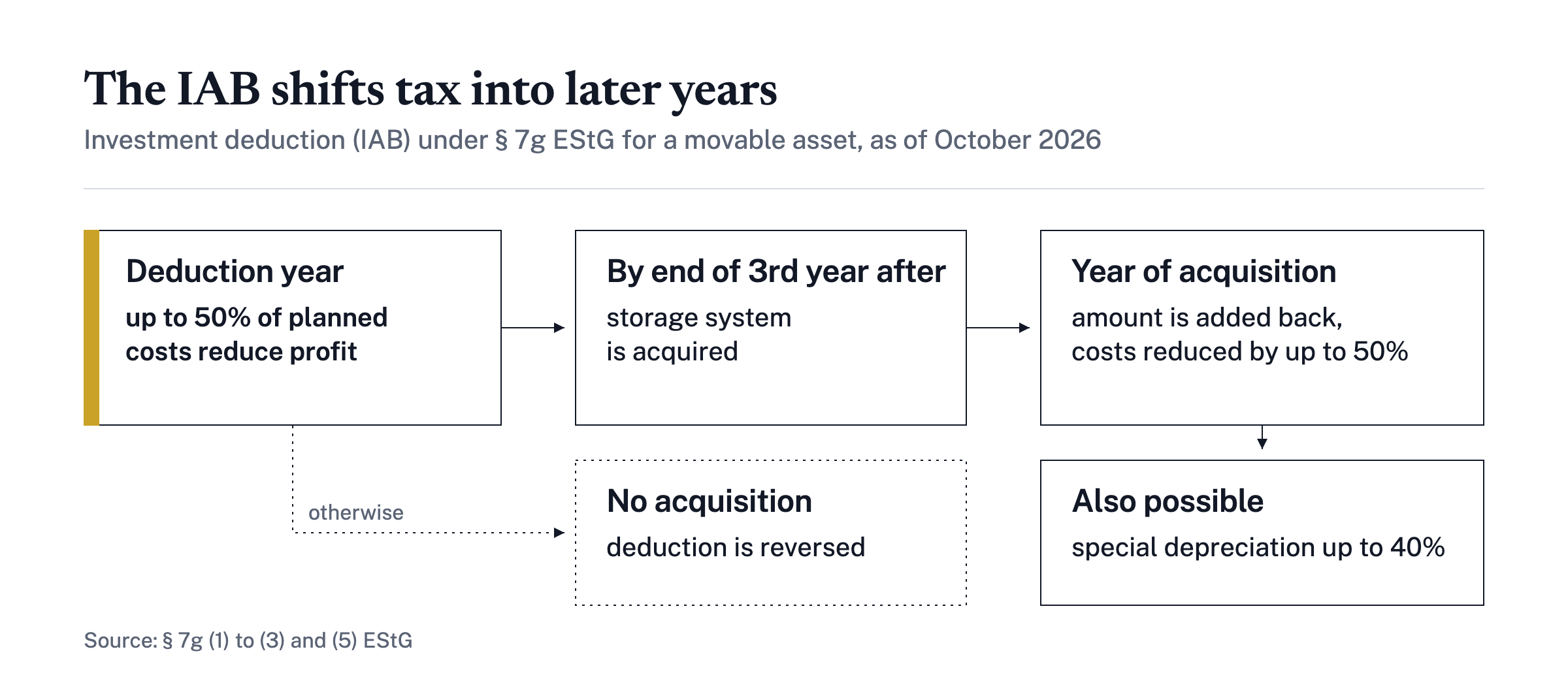
The investment deduction allowance (IAB) is a tax instrument under § 7g of the German Income Tax Act (EStG) designed to provide liquidity to small and medium-sized businesses. It allows up to 50 percent of the expected purchase or production costs of a future depreciable movable asset of fixed assets to be deducted from profit before the purchase is even made.[1] For a battery storage system, this means: if you plan a purchase, you reduce your taxable profit for the current year even though the expense has not yet occurred.
- Deduction of up to 50 percent of the expected purchase or production costs before the investment (§ 7g para. 1 sentence 1 EStG).
- Profit in the year of the deduction must not exceed 200,000 euros without taking the IAB into account (§ 7g para. 1 sentence 2 no. 1 letter b EStG).
- The deduction is also permitted if it creates or increases a loss (§ 7g para. 1 sentence 3 EStG).
- If the asset is not purchased by the end of the third financial year following the deduction year, the amount must be reversed (§ 7g para. 3 sentence 1 EStG).
- The sum of deduction amounts must not exceed 200,000 euros per business in the deduction year and the three preceding financial years (§ 7g para. 1 sentence 4 EStG).
In the year of the actual purchase, the amount is added back to profit, up to 50 percent of the costs; at the same time, the purchase costs can be reduced by up to 50 percent (§ 7g para. 2 EStG).[1] In addition, subject to further conditions, a special depreciation of up to 40 percent of the costs is possible in the year of purchase and the following four years (§ 7g para. 5 EStG).[1] The IAB is therefore not a windfall; at its core it is a tax deferral with an interest advantage: the tax burden is shifted into the future, and the final saving depends on your personal tax rate.
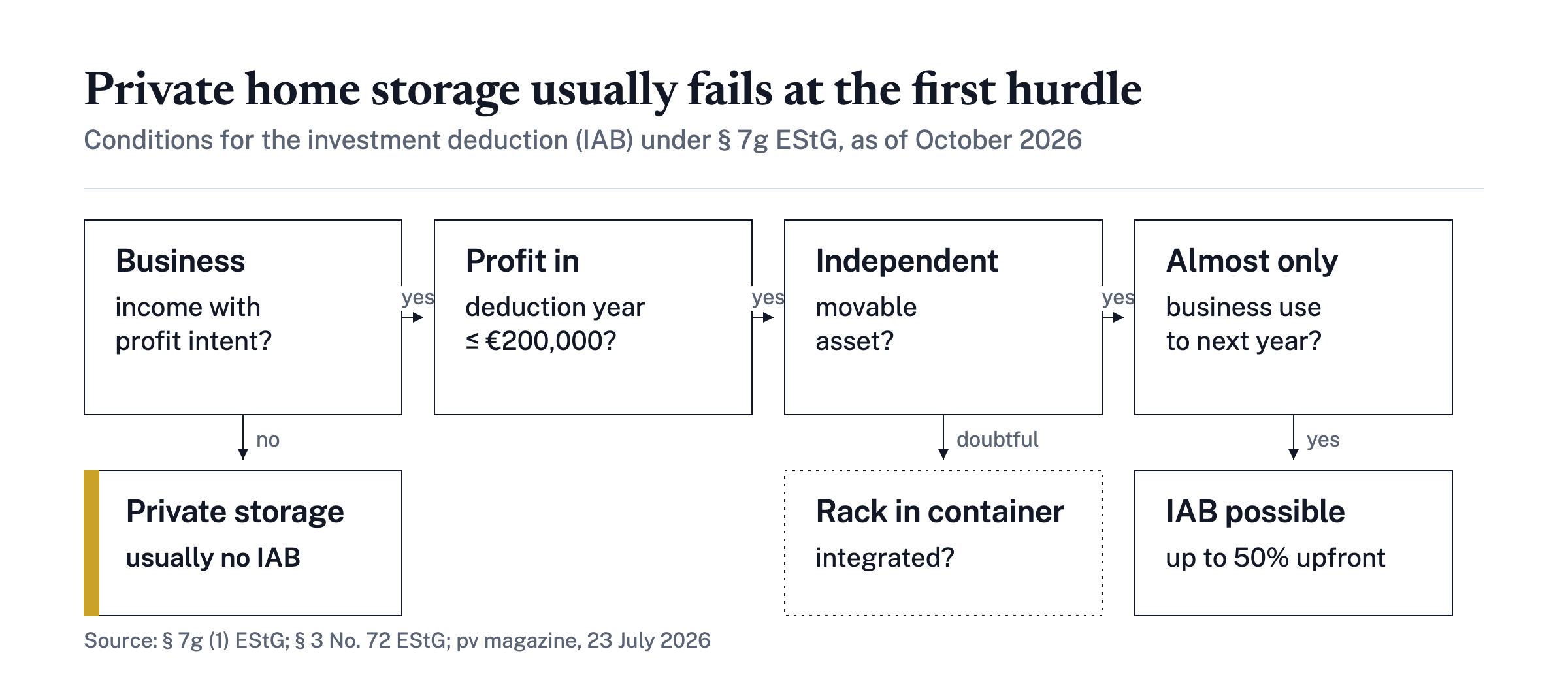
The IAB requires business or self-employed income generated with the intention of making a profit. Employees without such income cannot use it.
Do battery storage systems qualify for the IAB?
The answer depends less on the technology than on what the investor actually acquires for tax purposes. Under § 7g EStG, the requirement is a movable, depreciable asset of fixed assets.[1] For battery storage systems, precisely this characteristic is not always uncontested.
| Characteristic | Freestanding single storage system | Rack in a storage container |
|---|---|---|
| Technical design | [2]Own inverter, own cooling, metering and control technology; technically usable on its own | [2]Pack or rack shares the container's inverter, cooling and energy management; not technically usable on its own |
| Classification as an asset | Regularly an independent asset | [2]Risk that only the entire container is treated as a single asset |
| IAB risk | As a rule unproblematic if correctly reflected in the contract | [2]Considerable; the deduction may be denied |
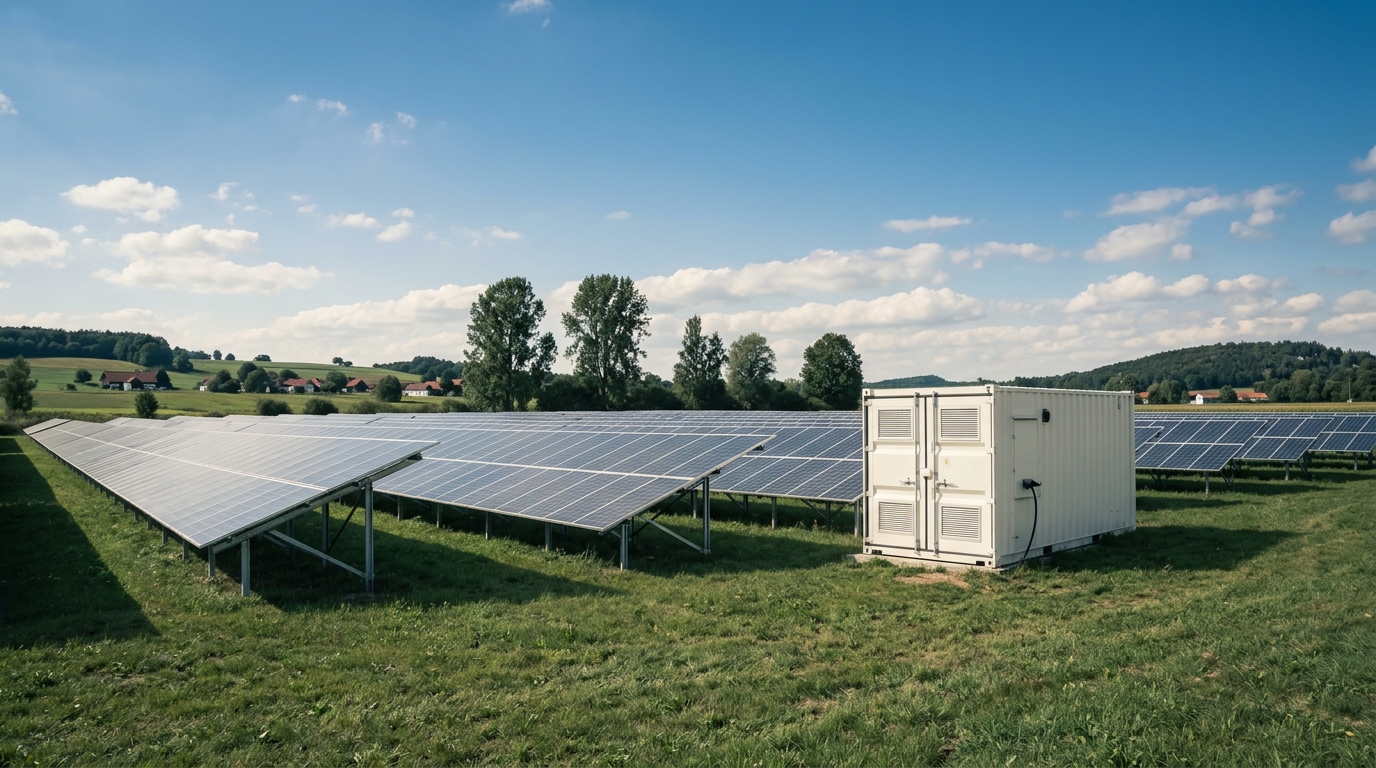
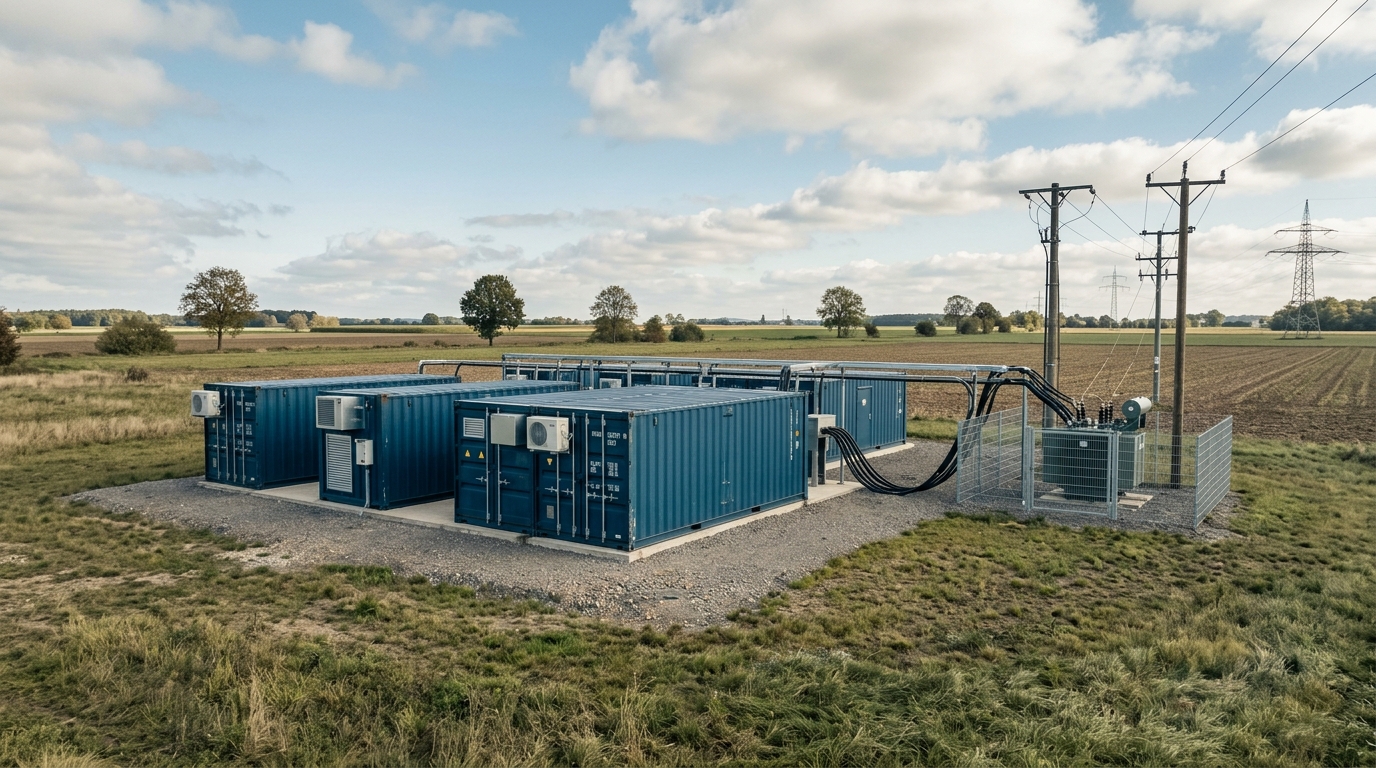
For the container configuration, the case law of the German Federal Fiscal Court (Bundesfinanzhof) applies a three-stage test: independent valuation based on external appearance and degree of connection, functional interdependence, and technical-scientific coordination.[2] A single battery pack that does not function without a shared inverter, cooling and energy management, and a container that loses its function when packs are removed, argue for technical interdependence under this line of reasoning.[2] The argument that it is "removable, therefore movable" does not carry on its own.
If the tax office does not treat the pack as an independent asset, further consequences loom in addition to the denial of the IAB: in case of doubt, the tax authorities assume a co-entrepreneurship in the form of a partnership under civil law (Gesellschaft bürgerlichen Rechts), or the container is attributed to the investors in proportionate shares under § 39 para. 2 no. 2 of the German Fiscal Code (AO). Both can mean back payments, late-payment interest and disputes before the tax courts.[2]
When does a battery storage system pay back?
The payback period is the time it takes for the returns or savings of an investment to cover its costs. For a photovoltaic system with storage, it depends on purchase costs, electricity yield, location, operating costs and, above all, self-consumption.[3] Model calculations give an order of magnitude, but they do not replace an individual calculation.
| Scenario | Typical payback period |
|---|---|
| 7-kilowatt system without storage | [3]8 to 14 years |
| 7-kilowatt system with storage | [3]9 to 15 years |
| 10-kilowatt system with an electric car, without storage | [3]6 to 12 years |
These ranges are based on average values for purchase costs, electricity yield, module degradation and self-consumption, financing without capital costs, and a moderate rise in grid electricity prices.[3] They are hypothetical and may differ in individual cases.
Self-consumption is decisive for the economic lifetime: every kilowatt-hour you consume yourself avoids buying grid electricity, which typically costs 30 to 40 cents per kilowatt-hour, while the feed-in tariff for systems up to ten kilowatts commissioned by 31 January 2026 was 7.86 cents per kilowatt-hour. A battery storage system shifts solar power into the evening hours and thus increases self-consumption.[3] However, it only shortens the payback of the overall system if its additional costs are offset by the avoided grid electricity costs over its service life. Pure large-scale storage investments without self-consumption follow different revenue models, which this article does not evaluate.
Is the investment deduction allowance (IAB) possible for photovoltaic systems?
Since 1 January 2022, income and withdrawals from smaller photovoltaic systems have been exempt from income tax under Section 3 No. 72 EStG, for example for systems up to 30 kilowatt-peak on a single-family home. The rule was intended to simplify the taxation of rooftop systems. However, it has a tax-related downside.
An IAB requires a business activity with an intention of making a profit, in other words a profit that must be determined. Anyone who, from 2022 onwards, only earns tax-free income under Section 3 No. 72 EStG no longer determines a profit. In the view of the tax authorities (BMF letter of 17 July 2023), an IAB is therefore no longer possible in financial years ending after 31 December 2021. IAB amounts already claimed that had not been added back to profit by the end of 2021 must subsequently be reversed if the planned system generates tax-free income. This reversal is disputed: the German Federal Fiscal Court (Bundesfinanzhof) expressed serious doubts about it in interim proceedings (order of 15 October 2024, case no. III B 24/24).[4]
- No IAB for businesses that earn exclusively tax-exempt income from photovoltaics.
- Exception: If the system belongs to a business whose purpose is not limited to electricity generation, the general IAB rules continue to apply.
- Exception: Systems remaining in other business assets remain eligible for the IAB, for example a PV system on the roof of a commercial business.
- Tax exemption goes hand in hand with a prohibition on deducting the related expenses as business expenses (Section 3c (1) EStG).
For private individuals, the conclusion is: a home storage system that buffers electricity for your own household regularly belongs to a tax-exempt or private sphere. Without business income with an intention of making a profit, the IAB route remains closed. So if you come across online advertising promoting tax advantages for home storage systems, look closely at which usage scenarios they actually apply to.
Which investments are eligible for the IAB?
In addition to the question of the asset, Section 7g EStG sets clear financial conditions. They concern the amount of profit, the total volume of deductions and the deadlines. Anyone who exceeds these limits loses the benefit entirely or in part.
- Profit requirement: The profit, determined under § 4 or § 5 EStG (Income Tax Act), must not exceed 200,000 euros in the deduction year, disregarding the IAB (§ 7g para. 1 sentence 2 no. 1 letter b EStG).[1]
- Volume limit: The sum of deductions that were not added back or reversed in the deduction year and the three preceding financial years must not exceed 200,000 euros per business (§ 7g para. 1 sentence 4 EStG).[1]
- Investment deadline: The acquisition or manufacture must take place by the end of the third financial year following the deduction year; otherwise the deduction is reversed (§ 7g para. 3 sentence 1 EStG).[1]
- Add-back and special depreciation in the year of acquisition: The profit-increasing add-back of up to 50 percent, the reduction of purchase costs and the special depreciation of up to 40 percent in total follow the rules from the first section (§ 7g paras. 2 and 5 EStG).[1]
An additional legal framework concerns the offering format: participations in battery storage containers are frequently offered as asset investments within the meaning of the German Asset Investment Act (VermAnlG). This act regulates, among other things, the obligation to publish a sales prospectus (§ 6) and the asset investment information sheet (§ 13).[5] The prospectus and the information sheet are the documents against which opportunities and risks can be verified before subscribing.
The regulatory framework for storage systems themselves is also moving: on 1 October 2026, the Bundesnetzagentur (Federal Network Agency) adopted a determination on the market integration of electricity storage systems and charging points (MiSpeL). Such rules can affect the revenue models of large-scale storage systems.[6] Anyone investing in large-scale storage should check the status of these rules before subscribing.
Which assets qualify for the IAB?
The statutory text states the substantive requirements explicitly: eligible are depreciable movable assets among fixed assets that are rented out, or used exclusively or almost exclusively for business purposes in a domestic place of business, at least until the end of the financial year following the financial year of acquisition (§ 7g para. 1 sentence 1 EStG). In addition, the sums of the deduction amounts must be transmitted electronically in officially prescribed data formats (§ 7g para. 1 sentence 2 no. 2 EStG).
- Movable: The asset must be physically locatable and must not be an essential component of a building. A free-standing storage cabinet generally meets this; a system firmly integrated into a building does not automatically.
- Depreciable: The value must be written off over its service life, which is typically the case for battery storage systems because of cell ageing.
- Fixed assets: The item must be used permanently in the business, not serve as inventory.
- Use requirement: Rental or business use in a domestic place of business, exclusively or almost exclusively, beyond the year of acquisition and the following financial year (§ 7g para. 1 sentence 1 and para. 4 EStG). If this use is not achieved, the reduction, the reduction of the tax base and the add-back must be reversed (§ 7g para. 4 sentence 1 EStG).
Applied to battery storage systems, this means: a technically self-contained single storage unit that is contractually attributed cleanly to the investor regularly meets these requirements. For racks in shared containers, by contrast, the test often already fails on the criterion of being an independent asset, as described in the section on functional integration. Both tests, the substantive one and the asset-related one, must be met at the same time.
Next steps: from the home storage system to large-scale storage investment
For private individuals, the limits of the IAB are narrow: the deduction presupposes business income with an intention of making a profit, an independent movable depreciable asset, and compliance with the profit and volume limits. A home storage system in the tax-exempt or private sphere generally does not qualify. For direct container investments, the tax treatment of the acquired rack is the critical point, and the case law of the German Federal Fiscal Court (Bundesfinanzhof) on functional integration speaks against the tax advantages advertised by providers in many constellations.[2]
- Clarify the type of income: Are there any business or self-employment income with an intention of making a profit that the IAB could be offset against?
- Examine the asset: What exactly is acquired under the contract — a standalone storage system or a fractional share of a container? Can the rack be separated without losing its usability?
- Review the contract and prospectus: Read the sales prospectus and the asset investment information sheet under the VermAnlG and have the tax structure reviewed before subscribing.[5]
- Weigh the risks: With such physical-asset investments, total loss, illiquidity and provider or operator risk are realistic scenarios, not edge cases. Only accept return figures if the source, date and assumptions are disclosed.
- Read the statutory wording before interpretation: § 7g EStG and the BMF guidance on the tax exemption under § 3 No. 72 EStG are the benchmark, not marketing material.[1]
The financial regulator BaFin continuously publishes measures and consumer information on investment products on its website.[7] Anyone encountering a provider for the first time can check there whether regulatory measures are known.
This article does not replace individual tax advice. The legal positions described are based on the cited sources as of October 2026 and may change. The Livossa article “Battery storage as an investment: How large-scale storage systems earn money” explains how large-scale storage systems earn money at all. It describes the revenue models beyond the tax question and places the risks described here in a broader context. It is also worth taking a closer look at returns and risks of battery storage investments.
Frequently asked questions
What is the investment deduction allowance (IAB)?
The IAB is an instrument under § 7g EStG that allows small and medium-sized businesses to deduct up to 50 percent of the expected purchase costs for certain assets in advance, reducing their profit.
Are battery storage systems recognised as movable assets?
Freestanding individual storage systems are generally treated as movable assets. For shares in container-based storage systems, the tax office may reject this treatment because of their functional integration.
How high must business use be for the IAB?
The asset must be rented out at least until the end of the financial year following the purchase, or used exclusively or almost exclusively for business purposes at a domestic place of business; the tax authorities interpret “almost exclusively” as business use of at least 90 percent.
Does the IAB also apply to private photovoltaic installations?
As a rule, no. Since 2022, the income of many private PV installations has been exempt from income tax under § 3 No. 72 EStG, no profit is determined any more, and in the view of the tax authorities no IAB can be claimed for this purpose.
How quickly does a home storage system pay back?
This depends heavily on self-consumption. In model calculations, a 7-kilowatt installation with storage pays back after 9 to 15 years, because self-consumed solar power replaces more expensive grid electricity.
Sources
Risk notice. The content is general information and is not investment, tax or legal advice. Investments carry risks, up to the total loss of the capital invested; past returns are not a reliable indicator of future results. Tax information reflects German law at the time of publication; have your personal situation checked by a tax adviser. Risk notice
Related reading
All Real assets →Battery storage investment: understanding returns and risk
Returns and risks of battery storage investments: what the ISEA revenue index shows, which risks extend to total loss, and what § 7g EStG allows.
Solar investment returns: the assumptions behind the forecast
How a return forecast for a photovoltaic investment is built, which assumptions carry it and how four offers justify their figures.
Direct investment in solar PV: how photovoltaics works as an investment
How a direct investment in photovoltaics works, what investors own, the role of § 7g EStG and the EEG, and how four offers compare.